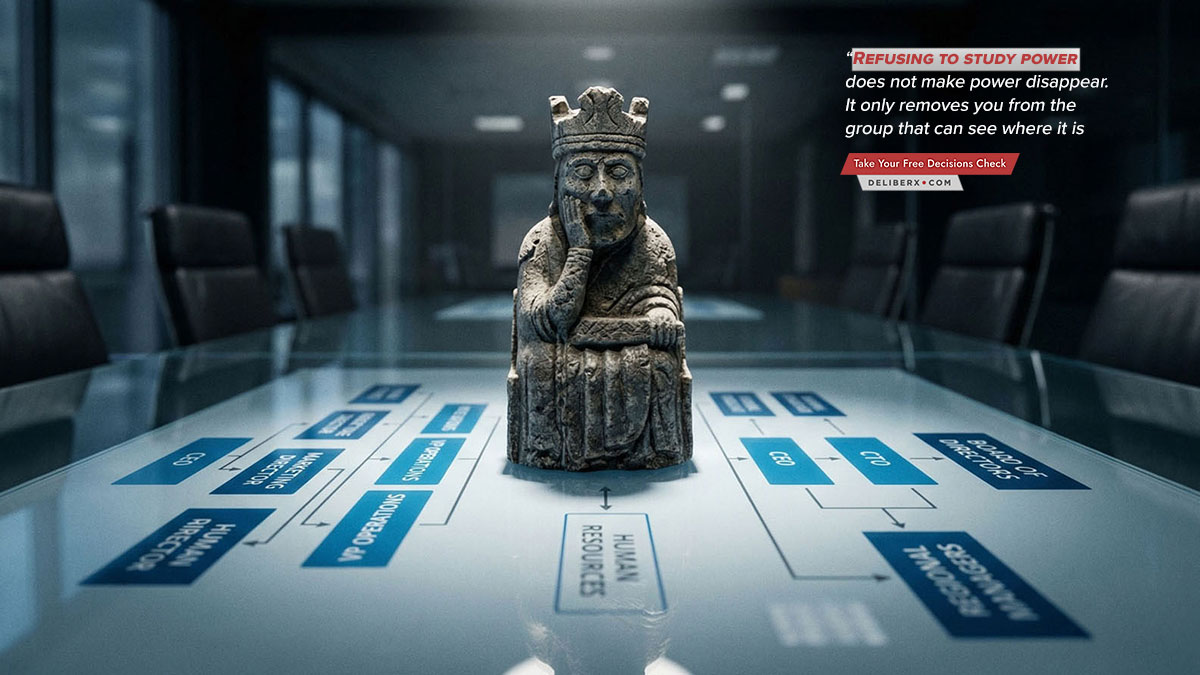
People who hate office politics often make one understandable mistake: they assume the alternative is to stay out of it.
They do good work, avoid camps, skip flattery and expect the formal system to carry the rest. In some organisations that works. In others the formal org chart explains surprisingly little about how decisions actually happen.
Office politics is not only gossip or manipulation. It is also the informal system through which information, trust, attention and scarce resources move. Research on political skill consistently finds links with performance, reputation and career success. The effects also differ across cultures, industries and seniority levels, which is why “India is hierarchical” is too lazy an explanation. A Bengaluru product company, a public-sector unit, a family-run manufacturer and a Mumbai bank can have very different political operating systems.
The useful question is not whether politics exists. It is where influence actually sits.
Watch who gets consulted before a meeting rather than during it. Notice whose objections can stall a decision. See who can call someone in another function and get a response. Pay attention to whose judgement is trusted when the data is incomplete.
Political literacy is not learning how to please powerful people. It is learning how the organisation converts relationships into action.
Flattery asks, “How do I stay liked?” Literacy asks, “What does this person care about, what constraints are they carrying and what would make my work easier to trust?” That difference matters. Recent research suggests political skill can improve promotability partly through stronger leader relationships. Other work shows social capital can buffer some of the damage created by highly political environments.
You do not need to become “political” in the cynical sense. You do need relationships before the crisis, not only when you need approval, rescue or a favour.
The calibration changes with sector, city, class, gender, generation and family responsibility. Junior employees may need visibility. Senior ones may need cross-functional trust. In some organisations hierarchy dominates. In others expertise does.
If you hate office politics, keep the dislike. Just make sure you are not also refusing to learn how your organisation really works.
Disliking office politics is fine. Not knowing where influence sits is expensive.
If decisions keep surprising you, look at how your organisation really turns relationships into action.
→ Play The Pressure Room: see how you decide under pressure